What sustainability is and why it belongs in your kitchen.
Sustainability means caring for the planet through mindful choices. It belongs in your kitchen because how you shop, cook, and clean can reduce waste, conserve resources, and create a healthier home and world
First, you don’t have to purchase anything to be more sustainable.
What do I mean by that?
You don’t need to buy anything to be more sustainable in your kitchen—it’s more about using what you already have. Simple habits like wasting less food, reusing containers, and cooking from scratch make a big difference. Sustainability starts with mindset, not money.
When it is time to replace or buy something for your kitchen, choosing with intention and awareness is a sustainable act, too.
What is Daiso?
Daiso is everything Dollar Tree wishes it could be. It offers a huge range of 100 yen items plus higher-quality goods for just a bit more—all with smart design and surprising durability.
So if you are looking to make sustainable swaps on a budget, or need to get some kitchen necessities because you just moved here. Daiso is the place for you.
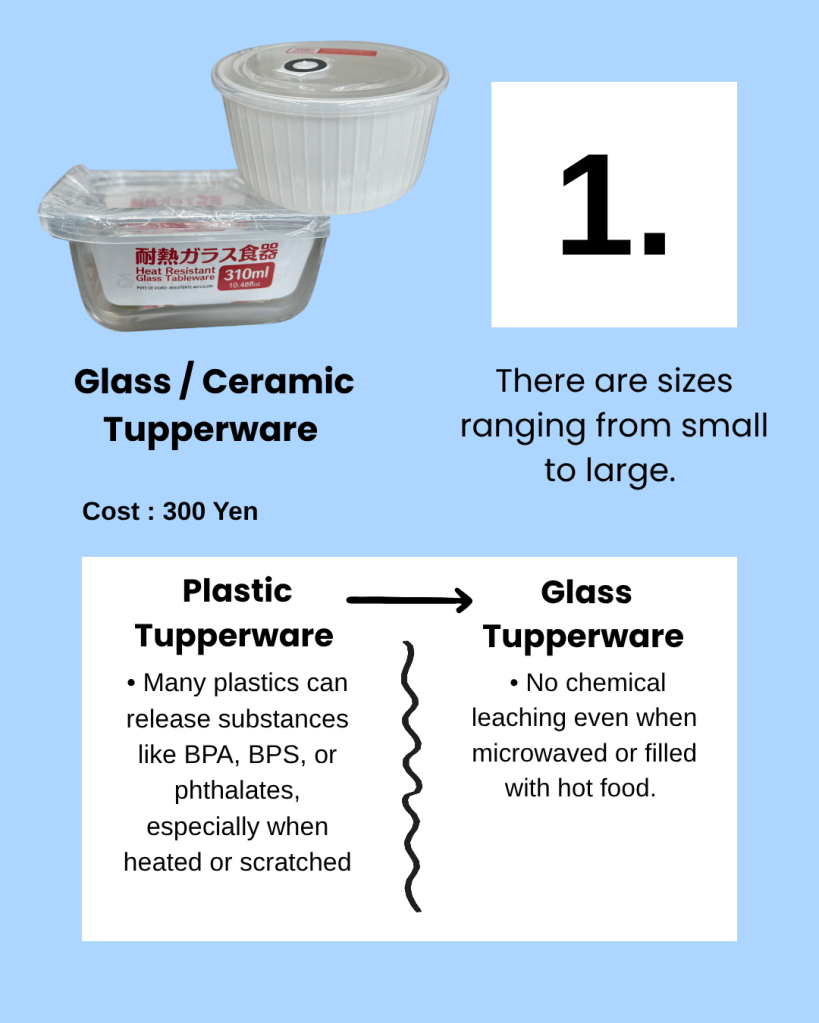
Let’s talk Tupperware
By this point in time, most people are aware of the dangers of plastic Tupperware containing BPA, which has been linked to hormone disruption and developmental issues. But what if I told you there are other, less-known chemicals to watch out for—like BPS (often used in “BPA-free” plastics), phthalates (used to make plastics flexible), and PFAS (so-called “forever chemicals” found in some nonstick or stain-resistant containers)? These can also leach into food, especially when heated, and have been associated with health risks ranging from hormonal imbalance to cancer.
By switching to glass Tupperware, you avoid the risk of harmful chemicals like BPA, BPS, phthalates, and PFAS leaching into your food—especially when reheating. Glass is non-toxic, durable, microwave-safe, and often lasts longer than plastic, making it a safer and more sustainable choice for your kitchen
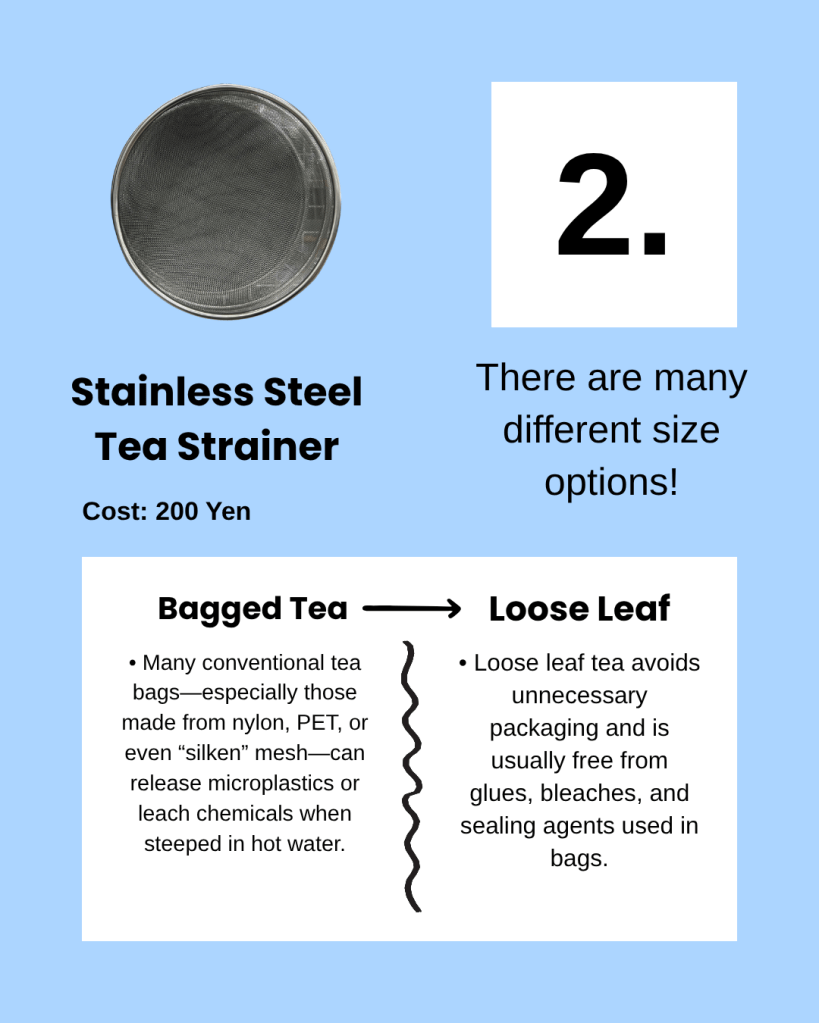
The Tea On Teabags
Tea is deeply woven into Japanese culture, and you can find an incredible variety in grocery stores. But beware when using bagged tea: it’s often lower quality than loose-leaf, typically using fannings or dust for quicker steeping . Even “paper” tea bags can harbor plastic fibers, and when steeped or microwaved release billions of micro- and nano-plastics—along with PFAS, the so-called “forever chemicals” shown to leak into beverages from many tea bags . Plus, bagged leaves lack the space to unfurl, robbing you of fuller flavor and aroma that loose-leaf teas provide.
So enjoy the surplus of loose leaf you can find off base or take a look at my Amazon favorites! There are many organic, delicious and affordable options to choose from.
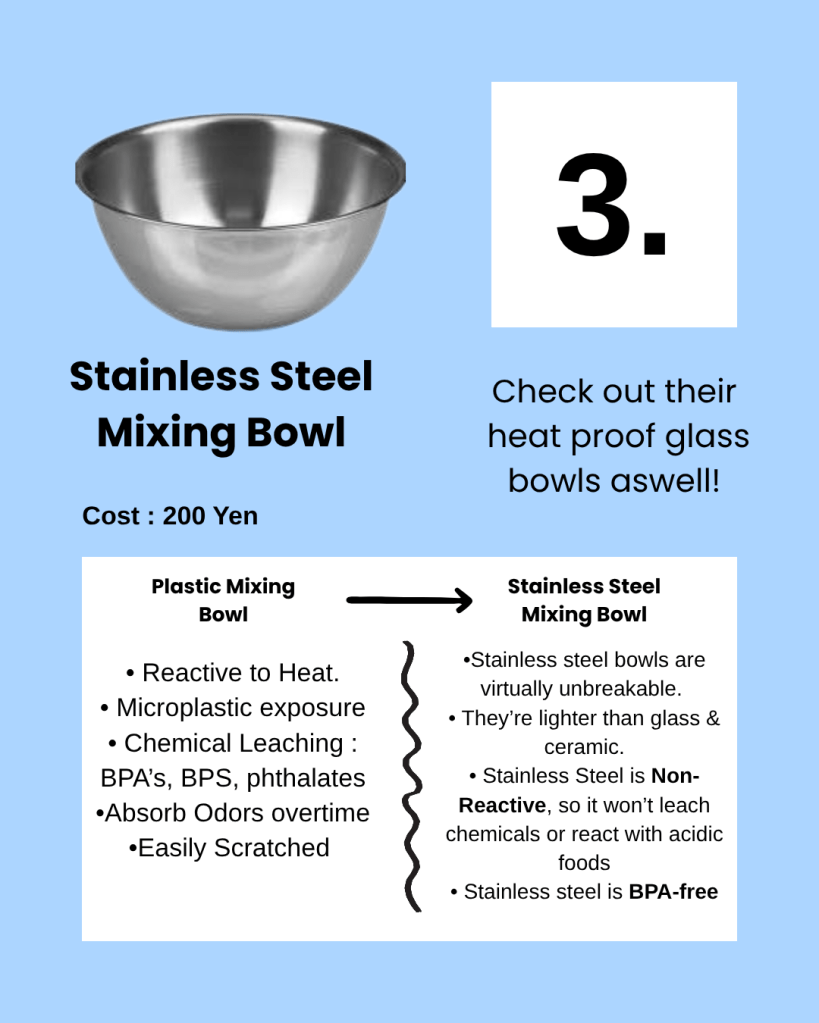
A simple low cost swap that goes a long way.
Stainless steel mixing bowls can easily replace just about every other type of kitchen bowl—except when it comes to sourdough, where glass is often the better choice. This was the first bowl I bought after moving here, and I can confidently say I use it nearly every day. They’re lightweight, heat-resistant, and practically indestructible—an all-around kitchen essential.
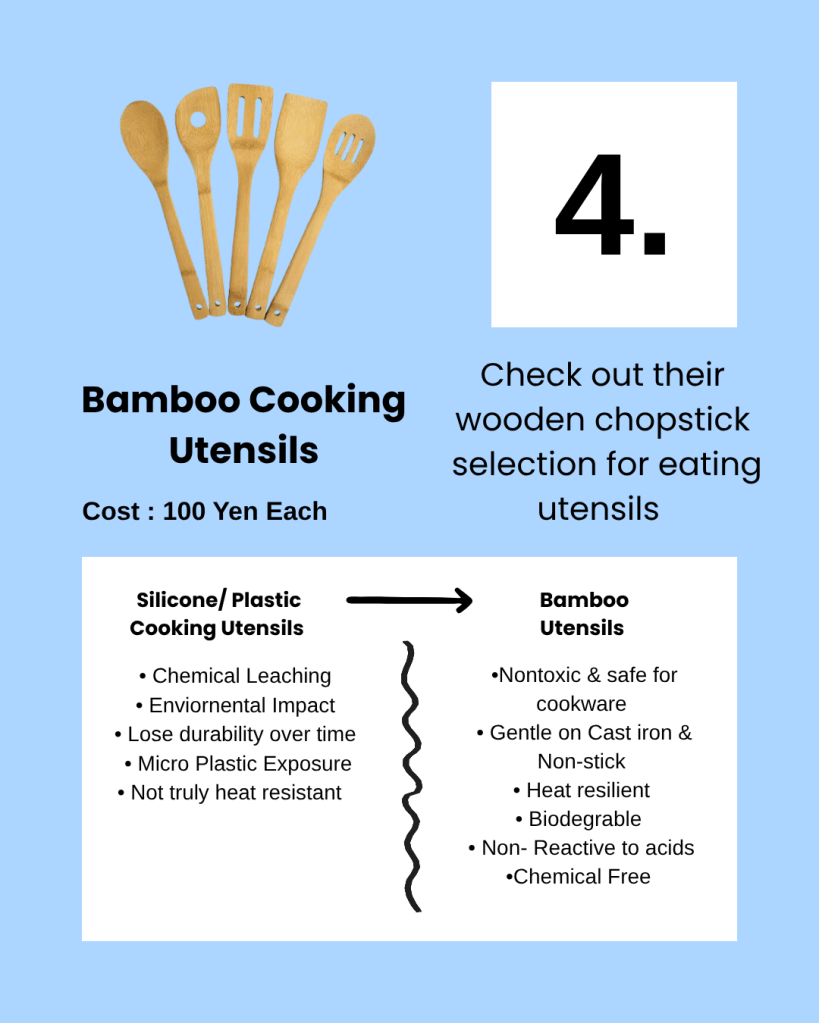
Better off with bamboo
Bamboo cooking utensils are a great sustainable choice for the kitchen. They’re biodegradable, heat-resistant, and gentle on all types of cookware. These particular utensils are sold individually, so when one wears out, you can replace just that piece instead of buying a whole new set. I recommend picking up one or two—you’ll be surprised how much you can do with just a couple of well-chosen tools!
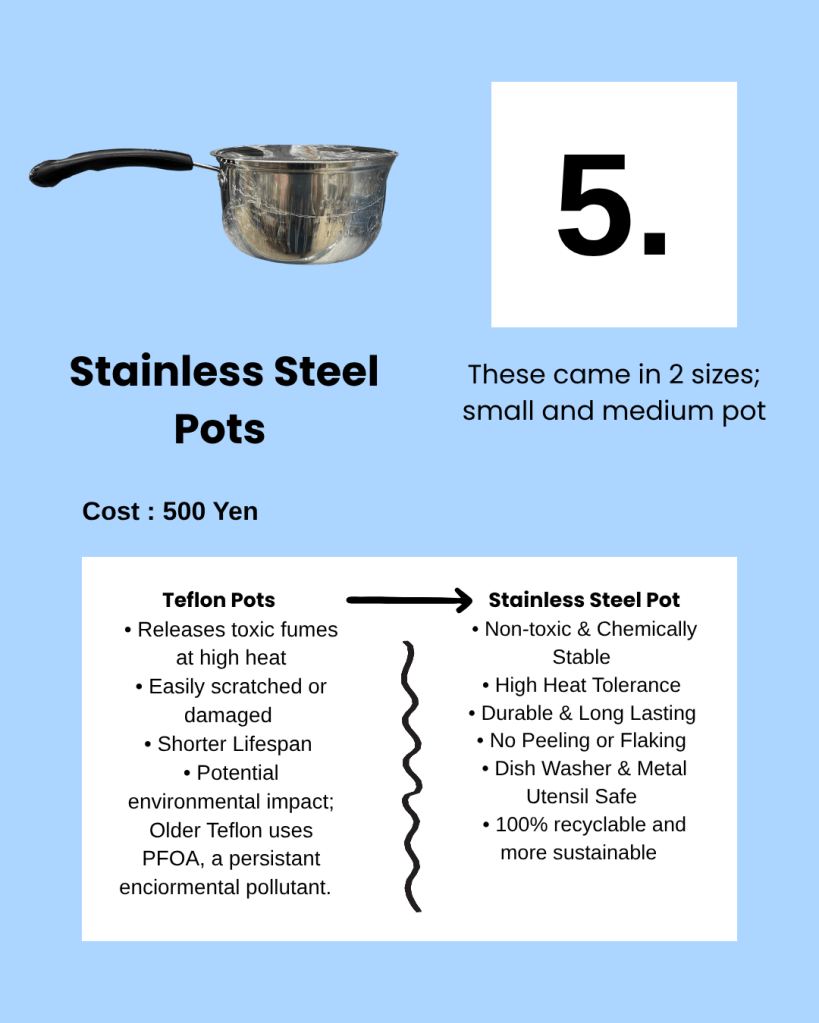
Stainless steel can be non stick!
If you’ve ever struggled with food sticking to your stainless steel pan (hello, scrambled egg cement), you’re not alone—I’ve been there too. For almost two years, I thought that was just the price of using stainless steel. But it turns out there’s a simple trick that makes all the difference: preheating your pan.
Here’s how to do it:
Start with a dry, empty pan – no oil yet! Set it over medium heat and let it warm up for about 1–2 minutes.
Test the temperature with the water droplet trick: flick a tiny drop of water into the pan. If it sizzles and evaporates right away, the pan needs more time. If it forms a single droplet that glides or dances across the surface, your pan is ready!
Now add your oil – it should shimmer, not smoke. Let the oil heat for just a few seconds, then add your food.
Why it works: When you preheat the pan, the metal expands and closes its tiny pores, creating a temporary non-stick surface. It’s a small step that makes a big difference—and saves you from scrubbing eggs off the pan for the next 30 minutes.
Give it a try next time you cook. Your pan (and your patience) will thank you.
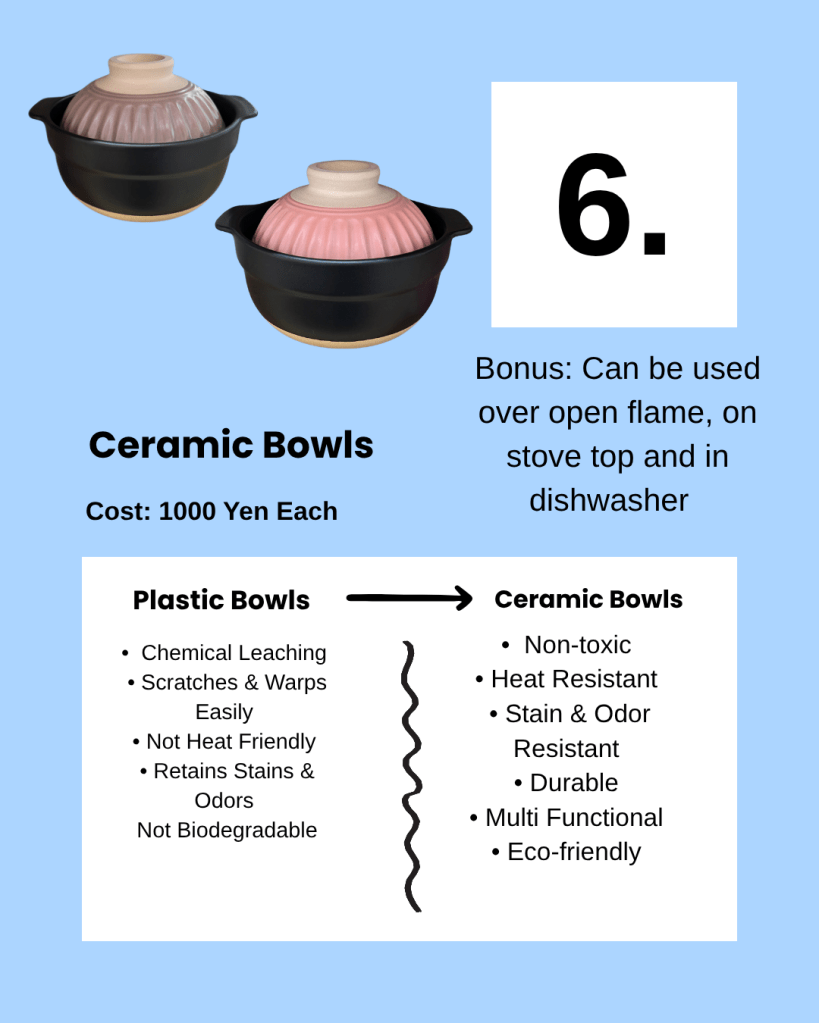
The most versatile bowls in my kitchen
These ceramic bowl and plate/lid combos have become one of my favorite kitchen staples. They’re incredibly versatile—you can cook in them, bake with them, and even use them directly on a gas stove. And when you’re done? Just pop them in the dishwasher. Easy.
One of the things I love most is how well they hold heat. That’s a game-changer when the baby decides to wake up right as my husband and I finally sit down to eat—dinner is still warm when we get back.
If you’re into minimalism, these are a great choice too. Let’s be honest—bowls are just more useful than plates most of the time!
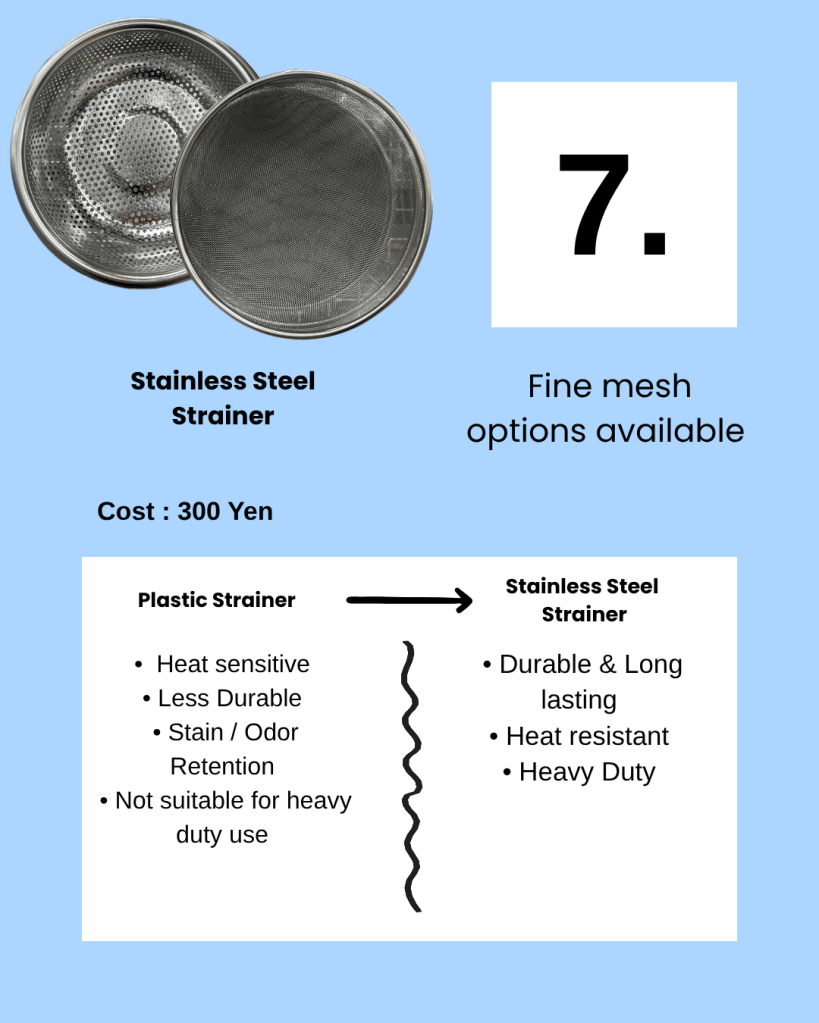
Why I switched from plastic strainers.
Growing up, we always used a plastic strainer for everything—from rinsing leafy greens to draining pasta straight from the boiling pot. It was just what everyone did.
But what we didn’t know then is that plastic strainers can release microplastics, especially when exposed to high heat. Studies have shown that boiling water can cause plastic kitchen tools to shed tiny particles, which may end up in our food.
A 2024 lab study found that both new and worn plastic cookware—including utensils and strainers—can shed thousands of microplastic particles into food each year, while non-plastic alternatives (like stainless steel or glass) did not
Now I opt for stainless steel – just as functional, but much safer for long-term health.
Sustainable shopping doesn’t have to be all or nothing
Shopping more sustainably doesn’t have to be expensive—and it definitely doesn’t have to happen all at once. Small, thoughtful choices add up over time, making a big impact on both your health and the planet. Every swap, no matter how simple, helps reduce waste and moves us toward a cleaner, more mindful way of living.
 PCS Pantry